Nina Carr, Disability Advocate
At Common Cause Australia, we believe advocacy is most powerful when it connects to the values we share. For experienced disability advocate Nina Carr, learning to harness those values through strategic messaging has taken her work and her confidence to an entirely new level.
When Nina Carr woke up in hospital four years ago with an acquired brain injury, her world had changed overnight. Simple things suddenly demanded immense mental effort; fatigue and cognitive slowness reshaped her daily reality. Yet, over time, Nina channelled her determination into a new mission: to make systems fairer, workplaces more inclusive, and institutions more humane for people with disability.
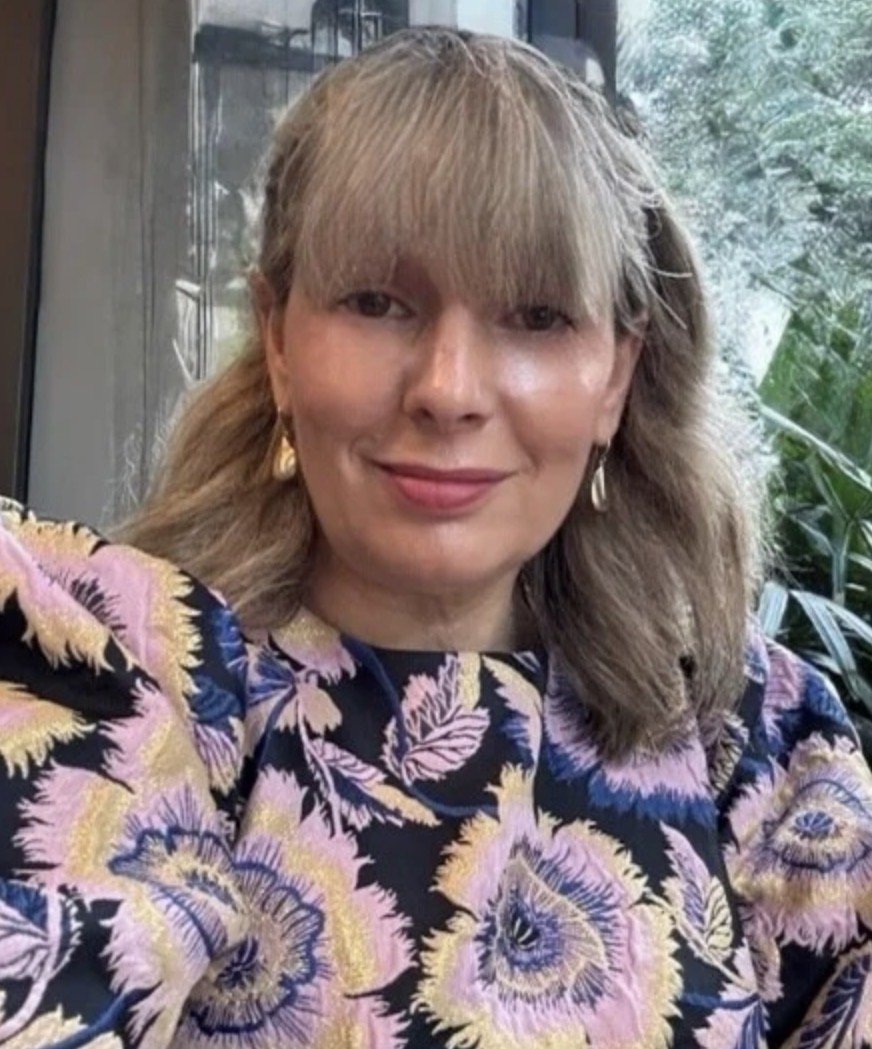
Today, Nina is an active advocate and change-maker, collaborating with a state government health department, research institutions, and policy committees to reimagine inclusion.
She says her path into this work was accelerated by Common Cause training, which gave her both the framework and confidence to lead change.
“Before the training, I had ideas but no direction. I didn’t know how to move forward or communicate what I wanted to say. Everything changed after that – it gave me the power and confidence to be clear,” says Nina.
Nina first encountered Common Cause through our work on the By Us, For Us disability messaging guide and quickly recognised something vital in the approach.
“I realised that what I was missing was structure, a way to speak with purpose,” says Nina. “I often walk into rooms where I have a tiny window of time to make an impact. I needed my words to land – to hit with purpose, but also build hope. Common Cause gave me the tools to do that.”
Amongst all the tools, the vision–barrier–action model in particular reshaped how she prepares for meetings and presentations. She now starts with her desired outcome and works backwards, crafting her message around shared values such as care, fairness, and community.
“Now when I talk to health professionals, I remind them: you’re in this work because you care about people. That’s your value. So when we create more inclusive systems, you’re actually living that value even more deeply,” says Nina.
Nina’s advocacy is wide-ranging, from pushing for legislative reform around workplace rights to calling for more flexible, inclusive employment practices.
Recently, she presented to a state government health department on how public sector workplaces can better accommodate people with disability. Her message combined moral clarity with a practical invitation: “I don’t attack people, but I don’t avoid the hard truths either. Someone has to say it can’t continue as it is,” says Nina.
Her values-based approach resonated. The department later described her presentation as one of the most impactful they’d heard and invited her to co-design future inclusion-focused webinars. “That’s when I knew the Common Cause training worked. People weren’t just listening – they were inviting me back to help shape what comes next”.
The training did more than refine her message – it transformed Nina’s sense of agency: “It helped me realise I can make big asks. I used to hold back, thinking I didn’t have the right. Now I’ll walk into a room and say, ‘Let’s rethink this system. How can we make it work for everyone?’”
She now frames every engagement around purpose and strategy: identifying the change she wants to see, anticipating resistance, and speaking to shared hopes rather than frustration. “It’s about pushing without pushing people away,” says Nina. “You can challenge people and still keep them with you.”
This approach has seen her invited to advise government committees, influence policy discussions, and help shape disability inclusion strategies. She’s also begun mentoring others with lived experience who are learning to find their own voice.
Asked what she’d tell other disability advocates considering Common Cause training, Nina says: “Do it. It gives you the power and confidence to be clear about what you want to say and the courage to say it. All roads lead to Common Cause. Because it’s all about who we are and who we can be, together.”
For Nina, framing issues using clear shared values is her biggest takeaway: “We all play a role in shaping the world we live in. What this work has taught me is that when issues are framed in ways that genuinely speak to the values people already hold, it builds confidence to act on what matters most to them. It helps people see that their actions have influence, that change is possible, and that together we can shape systems that reflect our shared humanity creating a world where everyone belongs.”
